

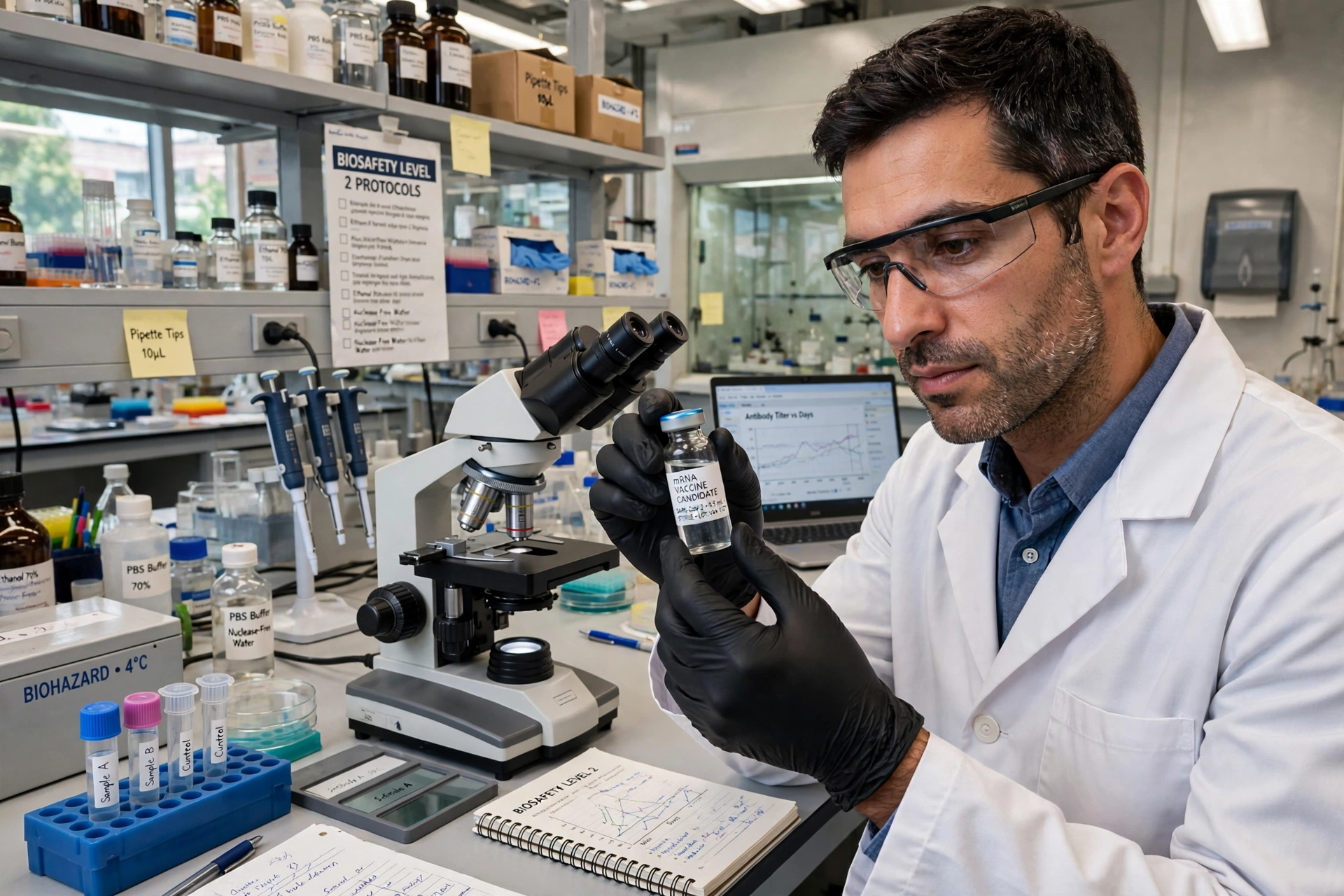
A vaccine designed separately for each patient has cleared an early and important hurdle in ovarian cancer research. In a phase 1 trial involving people with platinum-sensitive recurrent ovarian cancer, the personalised neoantigen vaccine NeoVax was combined with the immunotherapy drug nivolumab. Investigators reported that the vaccines could be made and given, that safety was acceptable and that immune responses were seen. The study, published in Nature Medicine, should be read as an early feasibility report, not as evidence of a cure.
What patients in the study received
NeoVax starts with the mutations in a patient’s own tumour. Laboratory analysis identifies neoantigens, distinctive fragments created by those mutations, and a vaccine is produced to alert the immune system to them. Nivolumab, given alongside, blocks the PD-1 checkpoint that can slow T cells down. The hope behind the pairing is straightforward to state and hard to prove: teach immune cells to recognise cancer-specific markers, while loosening a restraint that might prevent them from responding.
Authoritative background on the disease and its treatments is maintained by the National Cancer Institute, and the trial paper can be traced through the journal Nature Medicine. Recurrent ovarian cancer, meaning cancer that has returned after earlier treatment, is an area of real need. The participants in this study had a particular profile, described as platinum-sensitive, which limits how broadly the results can be applied.
Feasibility was the headline result
Phase 1 research asks whether an approach can be delivered safely enough to justify further testing. For a bespoke vaccine, delivery itself is a result. Tumour samples had to be analysed, individual vaccines manufactured and administered to the correct patients in combination with nivolumab. The researchers said that process proved feasible. They also judged the safety profile acceptable for this stage of development, and they detected T-cell responses, indicating that the immune system had registered the vaccine’s targets.
Those are genuine milestones, and they explain the national interest. But each one answers a preliminary question. Feasibility does not measure benefit. Acceptable safety in a small group does not predict every risk in a larger one. An immune response in a blood test does not, by itself, demonstrate that tumours shrank, that recurrence was delayed or that patients lived longer.
Keeping the news in proportion
Health stories travel fast, especially when words like vaccine and personalised appear together. Our recent coverage of measles cases surging in the United States dealt with a very different kind of vaccine, one that is established, standardised and preventive. NeoVax is experimental, therapeutic in intent and unique to each recipient. Confusing those categories would mislead patients who are making difficult decisions with their doctors right now.
What would change the picture
The next step is larger, carefully controlled research designed to measure clinical outcomes, not only manufacturing success and immune markers. Such trials would also need to confront practical questions: how long production takes, what it costs, which patients are most likely to respond and whether the approach can be delivered beyond specialist centres. Until those answers exist, the accurate national briefing is a balanced one. A personalised vaccine strategy for recurrent ovarian cancer has been shown to be buildable and administrable, with acceptable early safety and encouraging immune signals. That earns it further study, and careful attention, but not exaggerated claims.
What patients should ask their specialists
For patients reading this news, the practical questions are specific. Is a trial of this kind open, and would my cancer type and treatment history make me eligible? How long would manufacturing take, and what happens if a vaccine cannot be produced in time? What side effects were seen when the vaccine was combined with a checkpoint inhibitor, and how would they be monitored? Those questions cannot be answered by a news report. They belong in a conversation with an oncology team that knows the individual case, the available trials and the standard treatments that should not be delayed while an experimental option is considered.
Researchers, for their part, will be watching whether future studies recruit broader groups and publish outcome data that can be compared across centres. Transparency about failed manufacturing attempts and non-responders will matter as much as reports of immune responses, because it shows where the approach works and where it does not. That fuller record is what eventually turns an interesting phase 1 result into guidance clinicians can rely on.
