

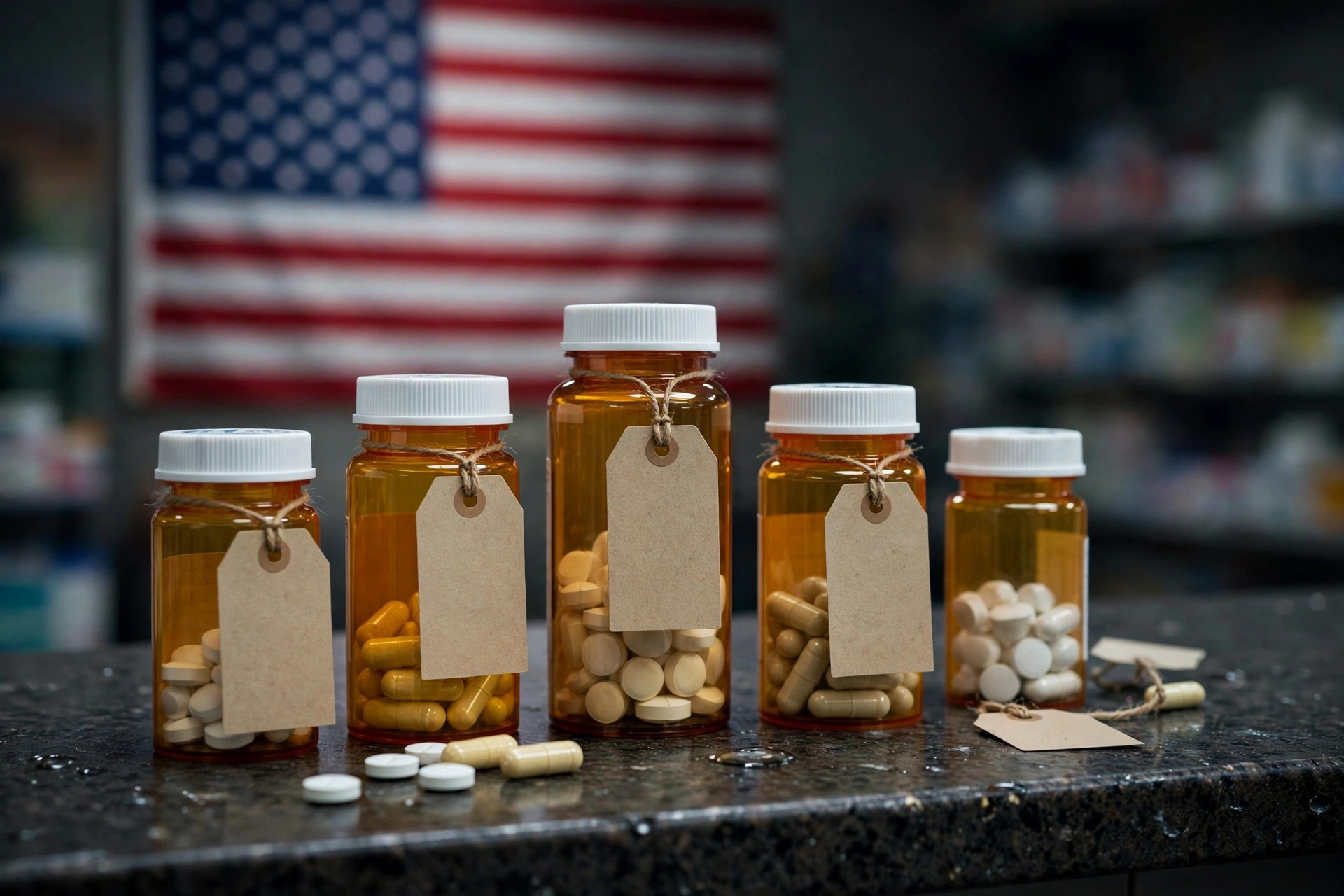
President Donald Trump has made health care, and prescription drug prices in particular, a central part of his pitch to voters. In speeches and interviews, he has argued that prices are coming down sharply, that patients will soon feel the difference at the pharmacy counter, and that his pressure on drug companies is succeeding where earlier administrations failed. It is a simple, memorable story. The available data tell a more complicated one.
That gap between claim and evidence is the subject of a detailed examination by The Bulwark, which compared the president’s statements with what is known about list prices, negotiated discounts, Medicare spending and the amounts patients actually pay out of pocket. Its conclusion, echoed by independent health policy analysts, is not that nothing has changed. It is that the changes are narrower, slower and far less universal than the political message suggests.
What a Drug Price Actually Is
Part of the confusion is built into the American system itself. A medicine rarely has one price. There is the list price set by the manufacturer, the confidential price negotiated by insurers and pharmacy benefit managers after rebates, the amount Medicare or a private plan pays, and the amount a patient hands over, which depends on a deductible, a co-pay or coinsurance. A headline discount on one of those figures can coexist with a higher bill on another.
That is why economists who study the market, including researchers at KFF, warn against judging policy by announcements alone. A deal covering a small number of medicines, a discount programme with eligibility limits, or a lower price in one government channel does not automatically reduce costs for the millions of people who buy coverage through an employer or on their own.
Where the Claims Run Ahead of the Data
The strongest claims have often concerned dramatic percentage cuts. When a president says a price will fall by several hundred per cent, the arithmetic itself should invite caution: a cut of more than 100 per cent would mean patients are paid to take a medicine. Analysts say such figures usually rest on comparing a US list price with a much lower price abroad, or on treating a negotiating target as if it were already an achieved saving.
There is also a timing problem. Announcing an agreement with a manufacturer is not the same as changing every contract, formulary and pharmacy system that stands between a factory and a patient. Some measures require regulation, some depend on companies volunteering, and others apply only when existing deals expire. In the meantime, list prices for many branded medicines in the United States have continued their long pattern of annual increases, even if the pace varies by drug.
Our earlier coverage of the administration’s health battles in Washington, including the clash over the CDC and vaccines involving Robert F. Kennedy Jr., showed a similar pattern: sweeping statements in public, followed by far more contested detail when officials are questioned closely.
What Patients Still Experience
For patients, the test is not a press release. It is whether insulin, cancer medicines, inhalers and newer weight-loss drugs are affordable in a given month. Surveys of adults in the United States have repeatedly found that many people delay filling a prescription, skip doses or split pills because of cost. Those behaviours are a useful reality check. If prices were falling as broadly and as fast as claimed, cost-related non-adherence would be expected to fall visibly with them.
Some policies could still produce real savings. Medicare negotiation for selected high-cost drugs, caps on out-of-pocket spending for seniors, and cheaper insulin for some patients are concrete mechanisms with defined populations. Their effects can be measured, drug by drug and year by year. That measurability is precisely what separates them from a general claim that the whole market has been transformed.
Why the Politics Are Hard to Shift
Health care also reaches beyond drug prices. Premiums, deductibles and the future of subsidised coverage determine what families pay before a prescription is even written. If support that helps people buy insurance is reduced or allowed to expire, households can end up worse off even when a particular medicine becomes cheaper. Looking at one price in isolation therefore misses the total bill a family faces over a year.
Republicans argue that deregulation, competition and direct pressure on manufacturers will deliver results without expanding government control. Democrats and many policy specialists counter that negotiation and regulation are needed because the market, left alone, has produced the highest drug prices in the developed world. That is a legitimate argument to have. It is best conducted with verifiable numbers: which drug, which price, for which patients, and from when.
The Bottom Line
Trump tells one health care story: decisive action, collapsing prices and immediate relief. The facts tell another: a fragmented system in which some targeted savings are real, many headline figures are overstated or premature, and most patients have yet to see a transformation at the counter. Until the administration publishes drug-by-drug results that independent analysts can check against what patients pay, voters should treat the biggest claims as promises still awaiting proof, not as results already delivered.

1 Comment
Pingback: Restoring Wine Cooler Performance With Skilled Austin Repair Specialists - NationalNewsFeed